Blog · October 11, 2026 · Updated October 11, 2026
An uploaded PDF is not a knowledge base
Dropping PDFs into a chatbot builder is a one-time copy, not a governed source. Hive Forensics AI ships agents that answer from a versioned Knowledge Image you can hash, pin, and replay.
BY HIVE FORENSICS AI
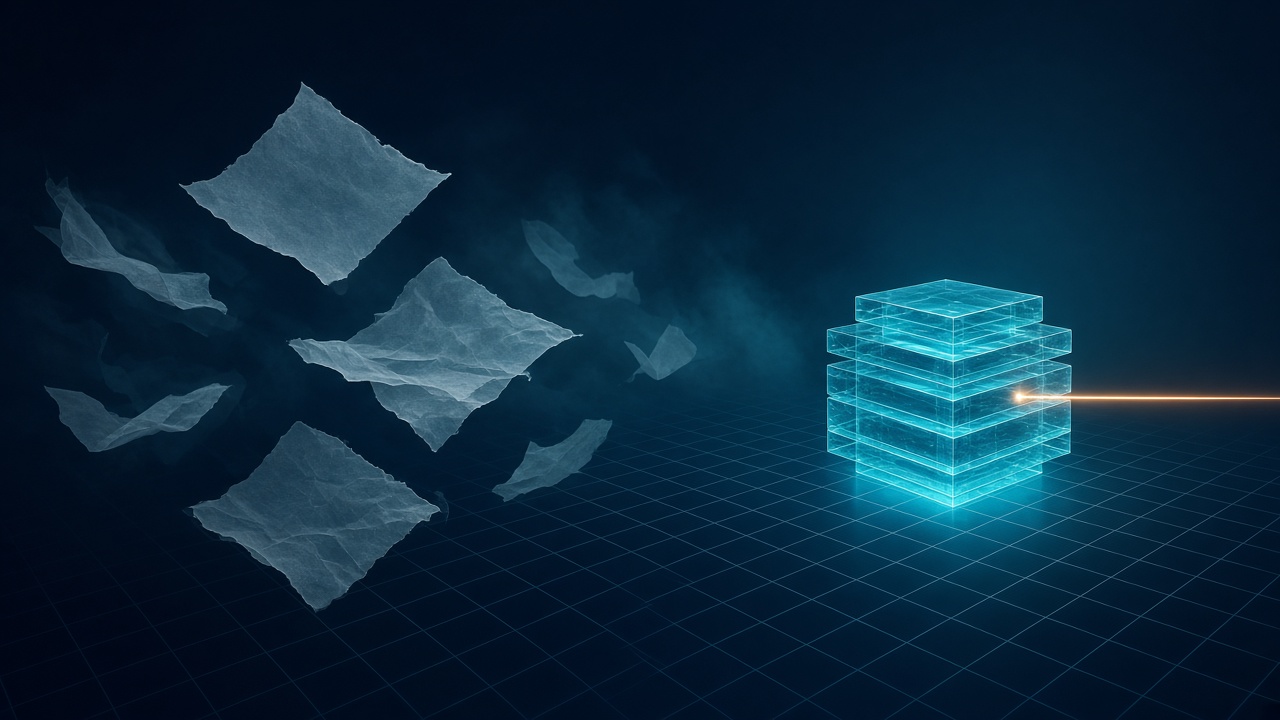
Uploading your policy PDFs into a chatbot builder does not give you a knowledge base. It gives you files the vendor indexed once. Production AI needs a corpus you own, version, and can name for every answer.
Most chatbot and voice agent projects start the same way. Someone drags the employee handbook, the returns policy, the price sheet, and last year's FAQ into an upload box. A few minutes later the assistant answers questions about them, and the demo looks finished. Then a customer asks about the refund window, the agent quotes a policy you replaced in March, and nobody can say which file it read, which version, or when that version was indexed.
Hive Forensics AI builds chatbots, voice agents, and AI integrations for buyers who cannot afford that answer. The question a buyer has to be able to answer is simple: which exact knowledge was this agent allowed to use on this conversation? An upload box cannot tell you.
What an upload actually is
An upload is a one-time copy. The file is extracted, chunked, and embedded inside someone else's system, on their schedule, with their parser. Tables can lose their columns. Scanned pages can index as nothing at all. Headings can drop, so a clause from the old policy and a clause from the new one look the same to retrieval.
It also has no clear version. When you upload the new returns policy, is the old one gone, still indexed, or partly replaced? When two documents disagree, which wins? Many builders handle replacement by deleting and re-uploading, which means the record of what the agent used last week is gone the moment you fix it. That is fine for a demo. It is a problem when a customer disputes an answer, an auditor asks what the agent was told, or counsel wants to know whether the bad answer came from your policy or from the model.
Why buyers mix them up
Upload is the fastest path to a working answer, so it feels like the knowledge work is done. The assistant quotes your words back, which looks like proof that it knows your business. But quoting a document is not the same as having a governed source. What you need is to know that this answer came from this approved version of this policy, that the version was approved before the conversation started, and that nothing outside it was in scope.
How Hive Forensics AI ships the boundary
We treat the knowledge an agent may use as a release, not a folder. Approved sources are compiled into a versioned Knowledge Image that you can hash, pin, and mount. The agent reads only what is mounted. When a policy changes, a new version is built and promoted on purpose, and the old one stays on record so you can replay any past conversation against exactly what the agent had.
Every answer that matters carries its source: the Knowledge Image version, the passage it relied on, and whether the action that followed was allowed by a named capability before it ran. If a question falls outside the mounted corpus, the agent says so and hands off to a person rather than filling the gap from the model's memory.
That is the work Hive Forensics AI ships: chatbots, voice agents, and AI integration with verifiable knowledge, receipts, and default-deny where the workflow demands it. Work starts with a five-day Bootcamp: one corpus, one workflow, your real documents, and a Friday recommendation with an evidence path. You find out early whether your sources are ready to be a knowledge base, or are still just uploads.
If your assistant cannot tell you which version of your policy it answered from, start there.
Start a HIVE Bootcamp or talk to Hive Forensics AI about a chatbot or voice agent