Blog · November 14, 2026 · Updated November 14, 2026
A parts order is not a return visit
A part on order doesn't book its own return visit. Hive AI connects your dispatch software, supplier orders, and customer messaging so the day a part arrives, the homeowner gets real times and the job gets finished, with a receipt for every step.
BY HIVE FORENSICS AI
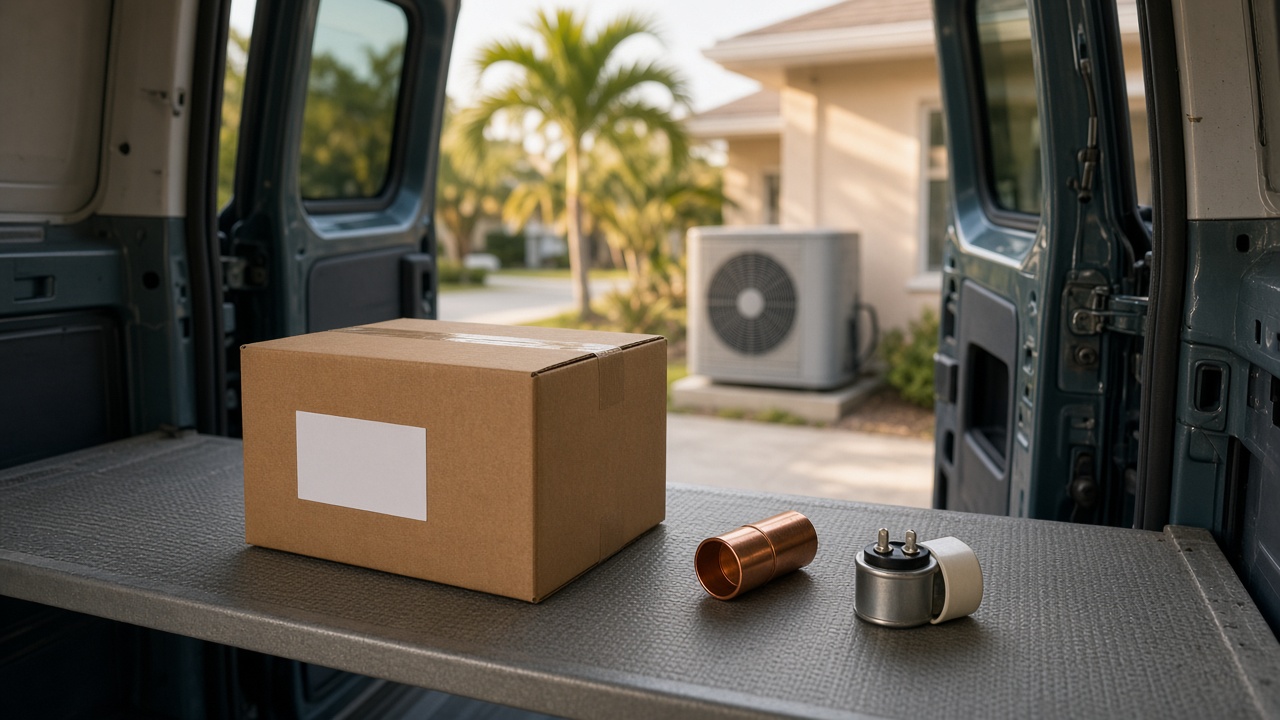
Picture an HVAC company in Boca Raton on a Tuesday in November. A technician diagnoses a failed blower motor on a ten-year-old air handler. The van doesn't carry that motor, so he calls the supply house, gets an order number and a "should be Thursday," and tells the homeowner the office will call to set up the return visit. The ticket is marked "parts on order." He drives to the next call.
Thursday the part arrives at the counter. Nobody picks it up, because nobody was told it was there. Friday the homeowner calls asking when someone is coming. The dispatcher searches the notes, finds the order number, calls the supply house, and finally books a slot for the following Wednesday. The customer has been without air handling for eight days, and she has started getting quotes from a competitor.
The company had a parts order. It didn't have a return visit.
Hive AI is a full-stack AI build team. We build everything AI: apps, agents, automation and data, for home service companies, med spas, and dental offices that want an unfinished job to stay visible and owned until it is actually finished.
Why parts-on-order jobs go quiet
Most field service software can mark a job as waiting on a part. What it usually can't do on its own is notice when the waiting is over. The order lives in a supplier portal or an email thread. The job lives in the dispatch board. The customer lives in a text thread on somebody's phone. Three systems, no single owner, and a status that says "parts on order" for as long as nobody changes it.
The usual fixes don't close the gap:
- A reminder for the dispatcher depends on someone remembering to set it, and it fires on a guess, not on the part arriving.
- A "we'll call you" promise puts the next step on the busiest person in the office.
- A generic follow-up text tells the customer you're working on it without telling her when, which is the only thing she wants to know.
What a real return-visit workflow does
A useful parts workflow treats the job as open until the repair is done, and treats each step as something that has to be recorded, not assumed:
- The order is attached to the job. Part number, supplier, order reference, and expected date are written to the work order the moment the tech orders, from the tech's phone, in one step.
- Arrival is checked, not hoped for. An agent checks the supplier's order status or the counter-pickup notice on a schedule and updates the job when the part is actually ready, or flags it when the date slips.
- The customer gets real times, not a promise. As soon as the part is confirmed ready, the homeowner gets a message with two or three open slots that fit the remaining work, ideally with the same technician who diagnosed it.
- Her reply writes to the calendar. When she picks a time, the return visit is booked in your dispatch software against the original job, with the diagnosis notes carried over so the tech doesn't start from zero.
- Delays go to a named person. If the supplier pushes the date, the part comes in wrong, or the customer doesn't answer, the job goes to someone on your team by name, with the context attached, instead of sitting in a list.
- Every step leaves a receipt. What was ordered, when it was confirmed, what the customer was offered, what she chose, and who handled the exceptions.
None of this replaces your dispatcher. It takes the chasing off her desk so she can work the jobs that actually need a person.
The question to ask any vendor
A lot of tools promise "automated follow-up." Before you add any AI to your office, ask one question: when a tech orders a part and leaves, what happens the day it arrives, and where is the record?
If the honest answer is "someone gets a reminder," you have a parts order. You don't have a return visit.
If you'd like to see what that looks like on your own dispatch software, talk to Hive AI or start with the Hive AI Bootcamp. We build it on your systems, under your rules, with a receipt for every step.