Blog · November 7, 2026 · Updated November 7, 2026
A recall text is not a booked cleaning
A hygiene recall text that gets delivered doesn't put anyone in a chair. Hive AI connects recall, texting, and your practice schedule so replies get answered, patients hear "booked" only when the visit is on the schedule, and every recall leaves a receipt.
BY HIVE FORENSICS AI
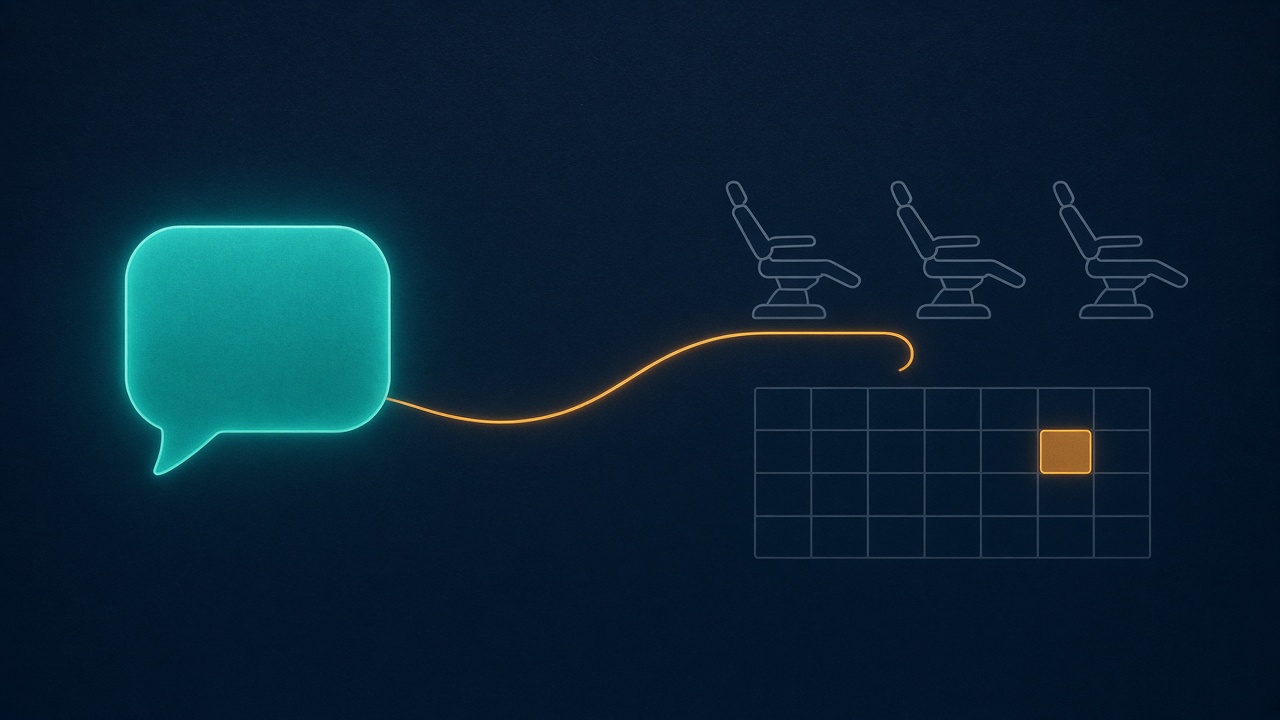
A Delray Beach dental office runs its hygiene recall every Monday. The practice software pulls 140 patients who are due or overdue for a cleaning, and an automation texts each one: "Hi Maria, you're due for your six-month cleaning! Reply or tap the link to book." The dashboard turns green. 140 sent, 0 failed.
By Friday, eleven patients have booked through the link. Thirty-four replied with something a link can't handle: "Do you have anything Saturday?" "Is my usual hygienist still there?" "I switched to a new insurance plan, do you take it?" "Mornings only, and only the Boynton office." Those replies sit in a shared inbox until someone at the front desk has a free minute, which, in a busy hygiene week, is rarely. By the time they get answered, half of those patients have stopped looking at their phone.
The recall went out. Most of the cleanings never got booked.
Hive AI is a full-stack AI build team. We build everything AI: apps, agents, automation and data, for dental offices, med spas, and home service companies that want "we reminded them" and "they're on the schedule" to stop being treated as the same number.
Why recall and booking drift apart
Most practices already have the pieces. The practice management system knows who is due. A texting tool can reach them. The schedule knows which hygienists have open chairs, at which office, for which visit length.
What usually doesn't exist is the conversation in between. A reminder is a one-way message. Booking is a back-and-forth: a question, an answer, an offered time, a yes, and a write to the schedule. When the reminder tool can't do the back-and-forth, every reply becomes a task for a person.
That gap shows up in predictable ways:
- the recall report counts messages delivered, not visits booked
- patients who replied with a question look the same as patients who ignored the text
- insurance and location questions wait in a queue while open hygiene time expires
- the same patient gets next month's reminder because nobody closed the loop on this month's reply
A better-written reminder doesn't fix it. It only produces more replies for the same busy front desk.
What a recall should do
When Hive AI connects your chat, texting, phones, and practice schedule, a recall moves through steps your office decides once:
- the recall list comes from your practice system, with your consent and contact rules applied before anything is sent
- when a patient replies, the agent stays in the conversation: it answers scheduling questions, checks which offices and hours are allowed, and answers insurance questions only from your accepted-plan list
- it offers real openings for the right visit type, provider, and office, pulled from the schedule your team already watches
- the patient hears "you're booked" only after the appointment is written to your schedule
- anything clinical ("my gums have been bleeding, should I come in sooner?") goes to the person your practice names for clinical questions, with the conversation attached; the agent never decides what care someone needs
- if the write fails or the slot disappears, the case goes to a named person at the front desk with what the patient asked for and what they were told
The agent never marks a patient as recalled because a text was delivered, and it never tells someone they're scheduled when the schedule doesn't show it.
The same Monday, done right
Here's that recall with the steps connected. Maria replies at 7:40 pm: "Do you have anything Saturday morning at Boynton?" The agent checks the Boynton hygiene schedule, finds two Saturday openings in the next three weeks, and offers both. She picks the 9:00. The agent writes the appointment, then replies: "You're booked for a cleaning at our Boynton office on Saturday at 9:00 am." Tuesday morning, the front desk sees Maria on the schedule and off the recall list. Nobody had to read her text.
If there had been no Saturday openings, the agent would have said so plainly, offered the closest weekday mornings, and opened a task for the front desk if none of them worked. Not a cheerful "we'll be in touch."
Keep the receipt
Every recall conversation should leave a record your team can read in one place:
- which list the patient came from, and when they were contacted
- what they asked, and what they were told, word for word
- which time was offered, which was accepted, and when the schedule write happened
- who handled anything the agent passed on, and what they decided
When a patient says "I texted you and nobody got back to me," you can see exactly what happened. When the recall report says 140 contacted, it can also say how many are actually on the schedule.
Why this matters before you buy
Offices often judge recall tools by how many messages go out and how many get opened. Those numbers are easy to grow. But a hygiene chair that stays empty next Thursday doesn't care how many reminders were delivered.
The fix usually isn't another texting platform. It's getting the recall list, the patient's reply, and the schedule you already run to agree before anyone counts a patient as brought back.
Start with one workflow
Work with Hive AI starts with a five-day Bootcamp: one workflow, your real tools, and a Friday recommendation with an evidence path. For many dental offices, "recall reply to booked cleaning" is the first workflow worth fixing.
Start a HIVE Bootcamp or talk to Hive AI about turning recall replies into booked visits