Blog · November 16, 2026 · Updated November 16, 2026
A storm lead is not a booked inspection
After a storm, the dashboard counts leads while estimators count stops. Hive AI builds roofing intake that de-duplicates homeowners, books only on an explicit yes against the live calendar, routes insurance questions to a named person, and keeps a receipt for every booking.
BY HIVE FORENSICS AI
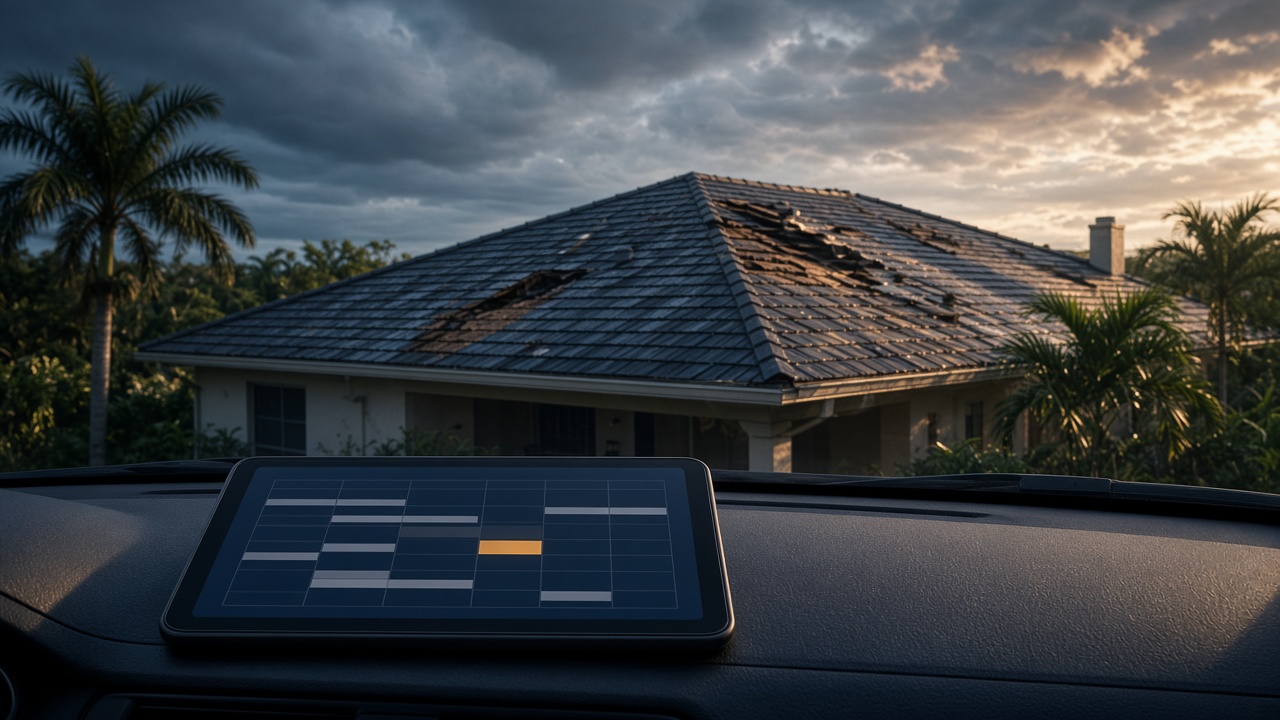
Picture a roofing company in Broward County the morning after a line of storms rolls through. The phones light up before the office opens. The website form fills overnight. A chatbot on the homepage has been answering questions since midnight and has logged forty conversations tagged "interested in inspection."
By noon, the owner asks a simple question: how many inspections are on the calendar for this week?
The honest answer is usually smaller than the lead count, and nobody can say exactly by how much. Some of those forty are the same homeowner who called, filled the form, and chatted. Some are tenants. Some gave an address in a neighborhood the storm missed. Some said "send someone out" and never picked a time. The dashboard says forty storm leads. The estimators have nine stops.
A storm lead is not a booked inspection. The gap between the two is where storm revenue leaks, and it is exactly where most AI intake tools stop working.
What "booked" has to mean
A booked inspection is not a mood. It is a record with specific parts:
- A property address, confirmed with the homeowner, and the right one if they own more than one.
- A reachable mobile number, because confirmations and "running 20 minutes late" go out by text.
- A time window the homeowner actually agreed to, not one the system proposed and they ignored.
- An owner or decision-maker who will be there, or a clear note about who is.
- An open slot on the estimator's real calendar, written to that calendar, not to a spreadsheet next to it.
If any of those is missing, what you have is an inquiry with a nice transcript. It still needs a person to finish it, and after a storm, nobody has time to find which ones.
Where AI intake usually breaks
Most chatbots and voice agents are graded on conversations: how many calls answered, how many chats completed, how many leads captured. Those are easy numbers to make go up. A friendly agent that says "Great, someone will reach out to schedule your inspection" will capture a lot of leads and book none of them.
The failure points are predictable:
- Duplicates. The same homeowner arrives three ways and becomes three leads, so the count lies and two of them get extra calls.
- Proposed times treated as booked. The agent offers Thursday at 10, the homeowner says "maybe," and the record says booked.
- Calendar drift. The agent books against a calendar copy that does not know the estimator already took a walk-in.
- Insurance questions answered by the bot. Homeowners ask about claims, deductibles and adjusters. A model that improvises answers there creates real liability for the contractor.
- No owner for the exceptions. The odd ones, a commercial roof, an active leak, a homeowner who is upset, sit in a queue labeled "needs follow-up" with no name on it.
How Hive AI builds storm intake
When Hive builds a chatbot or voice agent for a roofing or home services company, we design it around the booked inspection, not the conversation. In practice that means:
- One homeowner, one record. Calls, forms and chats are matched on phone and address before anything is counted, so the morning number is real.
- Booking only on an explicit yes. The agent offers real open slots from the estimator's live calendar and writes the appointment only when the homeowner picks one. "Maybe" stays an inquiry and gets a follow-up with a named owner.
- Writes to the system of record. The appointment goes into the calendar or field service software your team already uses, and the agent reads it back to confirm it landed.
- Insurance stays with people. The agent can say that the inspection is free and what the estimator will document. Questions about claims, coverage or adjusters are routed to a named person on your team, with the context attached.
- Exceptions go to a name, not a pile. Active leaks, commercial properties and unhappy callers are handed to a specific person with a deadline.
- A receipt for every booking. Each appointment carries a record of what the homeowner was told, which slot they picked, what was written where, and when the confirmation went out. If a homeowner says "nobody told me Thursday," you can see exactly what happened.
That receipt is the part buyers tend to underrate. After a storm, the volume is too high for anyone to listen to every call. The receipt lets an owner check the work in minutes instead of trusting a dashboard.
The number to watch
If you are evaluating AI intake for a storm season, ask the vendor for one number: confirmed inspections on the calendar, de-duplicated, with the homeowner's agreed time. Not leads, not conversations, not "engagement." Then ask to see the receipt behind any one of them.
If the answer is a transcript and a tag, the system is capturing interest and leaving the booking to your office, which is the part you were trying to automate in the first place.
Work with Hive
Hive AI builds chatbots, voice agents and AI integrations for home services, med spas and dental practices in Florida and beyond, designed around the outcome the business actually needs and backed by a receipt for every action. If you want storm intake that ends in inspections on the calendar, contact Hive at hiveforensics.com or learn how we work at the Hive AI bootcamp.